

报告题目:Phase Engineering of Nanomaterials (PEN)
报告时间:2026年11月12日 下午15:00
报告地点:新能源大楼附楼102会议室
报告人简介:
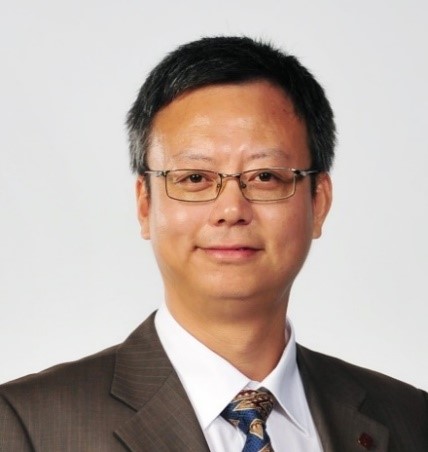
Dr. Hua Zhang obtained his B.S. and M.S. degrees at Nanjing University in China in 1992 and 1995, respectively, and completed his Ph.D. with Prof. Zhongfan Liu at Peking University in China in July 1998. He joined Prof. Frans C. De Schryver’s group at Katholieke Universiteit Leuven (KULeuven) in Belgium as a Research Associate in January 1999. Then he moved to Prof. Chad A. Mirkin’s group at Northwestern University as a Postdoctoral Fellow in July 2001. He started to work at NanoInk Inc. (USA) as a Research Scientist/Chemist in August 2003. After that, he worked as a Senior Research Scientist at Institute of Bioengineering and Nanotechnology in Singapore from November 2005 to July 2006. Then he joined the School of Materials Science and Engineering in Nanyang Technological University (NTU) as an Assistant Professor. He was promoted to a tenured Associate Professor on March 1, 2011, and Full Professor on Sept. 1, 2013. In 2019, he joined the Department of Chemistry in City University of Hong Kong as a Chair Professor, and currently he is the Herman Hu Chair Professor of Nanomaterials and the Director of Hong Kong Institute for Clean Energy.
He has published 8 invited book chapters, over 100 patent applications (including granted 1 China patent, 1 European patent, 3 Singapore patents, and 10 US patents), and over 600 papers. Some of his papers have been published in Nature, Science, Nat. Mater., Nat. Chem., Nat. Catal., Nat. Rev. Mater., Nat. Rev. Chem., Nat. Commun., Sci. Adv., Nat. Protocols, J. Am. Chem. Soc., Angew. Chem. Int. Ed., Adv. Mater., etc.As at Sept. 2026, the total cited times are over 153,800 with H-index of 193 (Web of Science), and over 173,100 with H-index of 204 (Google Scholar). He has been invited to give more than 300 Plenary, Keynote or Invited Talks in international conferences, universities and institutes. He has organized several tens of international conferences and served as the Conference (Co-)Chair or Symposium Chair.
He is the co-Editor-in-Chief of SmartMat(2020-) and co-Chairman of the Editorial Board of ChemNanoMat (2015-), and sits on the Advisory Board of Chemical Society Reviews (2012-2019), Aggregate (2020-present), Chemical Journal of Chinese Universities (2019-), Energy Materials and Devices (2023-), Materials Chemistry Frontiers (2016-), Matter (2019-), Nanoscale (2012-), Nanoscale Horizons (2015-) and NPG Asia Materials (2018-), the Editorial Advisory Board of ACS Nano(2014-), Advanced Functional Materials (2018-), Advanced Materials (2019-), Small (2012-), ACS Appl. Mater. Interfaces(2014-2019), Chem. Mater.(2014-2019) and Nanofabrication (2012-2020), the Editorial Board of 2D Materials (2022-), ACS Omega (2016-), Acta Physico-Chimica Sinica(2020-), Applied Materials Today (2015-), Carbon (2013-), CHEM (2016-), Chemical Reviews (2024-), Chemistry-Methods (2020-), Chinese Science Bulletin (2014-), Electron (2023-), Energy Storage Materials (2015-),EnergyChem (2018-), eScience (2020-), Graphene Technology (2016-), Materials Today Energy (2016-), NANO (2007-2020), Nano Convergence (2020-), npj 2D Materials and Applications (2016-), National Science Review (2023-), Research (2021), The Innovation (2020-), Transactions of Tianjin University (2019), and Science China Materials (2014-), the International Advisory Board of Chemistry – An Asian Journal (2018-) and Materials Research Express (2014-2016), the International Editorial Board ofChemPlusChem (2012-2015), and the Scientific Advisory Board of Small Methods (2017-).
In 2020, he was elected as a Foreign Fellow of the European Academy of Sciences (EurASc). In 2015, he was elected as an Academician of the Asia Pacific Academy of Materials (APAM). In 2014, he was elected as a Fellow of the Royal Society of Chemistry (FRSC). He was listed in the "Highly Cited Researchers" in Materials Science (Clarivate Analytics/Thomson Reuters, 2014-2025 (12 consecutive years)), in Chemistry (Clarivate Analytics/Thomson Reuters, 2015-2025 (11 consecutive years)), and in Environment and Ecology (Clarivate Analytics, 2022). In 2015, he was listed in 19 “Hottest Researchers of Today” in the world in the World’s Most Influential Scientific Minds 2015 (Thomson Reuters, 2015). In 2014, he was listed in 17 “Hottest Researchers of Today” and No. 1 in Materials and More in the world in the World’s Most Influential Scientific Minds 2014 (Thomson Reuters, 2014). Moreover, he also received the Gold Medal, the 51st International Exhibition of Inventions Geneva (2026, IEIG, Geneva, Switzerland). Croucher Senior Research Fellowship (2025, Croucher Foundation, Hong Kong), The 2nd Carbon Energy Golden Banyan Award (2025, Carbon Energy, Wiley-VCH and Wenzhou University), BOCHK Science and Technology Innovation Prize (2024, Hong Kong Alliance of Technology and Innovation), IUMRS-Frontier Materials Scientists Award (2023, IUMRS-ICFM), EcoMat Mid-Career Research Award (2023, Wiley-VCH),Outstanding Research Award (2022, City University of Hong Kong), President’s Award (2021, City University of Hong Kong), Young Investigator Award (2016, Young Giants of Nanoscience, Polytechnic University of Hong Kong), Vice-Chancellor’s International Scholar Award (2016, University of Wollongong, Australia), ACS Nano Lectureship Award (2015, American Chemical Society), World Cultural Council (WCC) Special Recognition Award (2013, World Cultural Council), the ONASSIS Foundation Lectureship (2013, Greece), Asian Rising Stars (2013, 15th Asian Chemical Congress), SMALL Young Innovator Award (2012, Wiley-VCH) and Nanyang Award for Research Excellence (2011, Nanyang Technological University).
Dr. Zhang’s research is highly interdisciplinary. His current research interests focus on phase engineering of nanomaterials (PEN) and controlled epitaxial growth of heterostructures, including the synthesis of ultrathin two-dimensional nanomaterials (e.g., metal nanosheets, graphene, metal dichalcogenides, metal-organic frameworks, covalent organic frameworks, etc.), novel metallic and semiconducting nanomaterials, novel amorphous nanomaterials, and their hybrid composites for various applications, such as catalysis, clean energy, (opto-)electronic devices, chemical and biosensors, and water remediation.
报告简介:
In this talk, I will summarize the recent research on phase engineering of nanomaterials (PEN) in my group, particularly focusing on the rational design and synthesis of novel nanomaterials with unconventional phases for various promising applications. For example, by using wet-chemical methods, for the first time, we have successfully prepared novel Au nanostructures (e.g., the hexagonal-close packed (hcp) 2H-Au nanosheets, 4H-Au nanoribbons, and 4H/fcc and fcc/2H/fcc heterophase Au nanorods), epitaxially grown metal nanostructures on the aforementioned unconventional Au nanostructures and 2H-Pd nanoparticles, and amorphous/crystalline heterophase Pd, PdCu, Rh and Rh alloy nanosheets. By using gas-solid reactions, metastable 1T'-phase group VI transition metal dichalcogenides (TMDs), e.g., WS2, WSe2, MoS2, MoSe2, WS2xSe2(1-x) and MoS2xSe2(1-x), have been prepared. Impressively, the 1T'-MoS2-supported single-atomically dispersed Pt (s-Pt) atoms with Pt loading up to 10 wt% exhibit superior performance in hydrogen evolution reaction. Importantly, 1T'-TMD monolayers can be stabilized on 4H-Au nanowires, which have been used for ultrasensitive SERS detection. Moreover, the salt-assisted 2H-to-1T' phase transformation of TMDs have been achieved, and the phase transformation of TMDs during our developed electrochemical Li-intercalation process has been observed. Impressively, the lithiation-induced amorphization of Pd3P2S8 has been achieved. Currently, my group focuses on the investigation of (crystal) phase-dependent physicochemical properties, functions and applications in catalysis, (opto-)electronic devices, clean energy, chemical and biosensors, surface enhanced Raman scattering, water remediation, photothermal therapy, etc., which we believe are quite unique and very important not only in fundamental studies, but also in future practical applications. Importantly, the concepts of phase engineering of nanomaterials (PEN), crystal-phase heterostructures, and heterophase materials are proposed.
Keywords:Phase engineering of nanomaterials (PEN); Noble metal nanomaterials; Transition metal dichalcogenides; Crystal phases; Unconventional phases; Amorphous phase; Crystal-phase heterostructures; Heterophase nanomaterials
Reference:(1) Nature, 2023, 621, 300. (2) Nat. Mater., 2026, 25, 972. (3) Nat. Mater., 2024, 23, 1355. (4) Nat. Mater., 2021, 20, 1113. (5) Nat. Rev. Chem., 2020, 4, 243. (6) J. Am. Chem. Soc., 2020, 142, 18971. (7) Nat. Chem., 2018, 10, 638. (8) Nat. Chem., 2018, 10, 456. (9) Nat. Catal., 2018, 1, 460. (10) Adv. Mater., 2018, 30, 1803234. (11) Chem. Sci., 2017, 8, 795. (12) ACS Nano, 2015, 9, 9451. (13) Nat. Commun., 2015, 6, 7684. (14) Nat. Commun., 2013, 4, 1444. (15) ACS Nano, 2012, 6, 74. (16) Nat. Commun., 2011, 2, 292. (17) Angew. Chem. Int. Ed., 2011, 50, 11093.